How to Find the Best Deals on Amazon: The Complete 2026 Guide
By: The DealRanked Desk
Published:
Updated:
A practical, no-fluff guide to spotting genuinely great Amazon deals. Learn the filters, price-history tools, and scoring tricks that separate real savings from fake discounts.
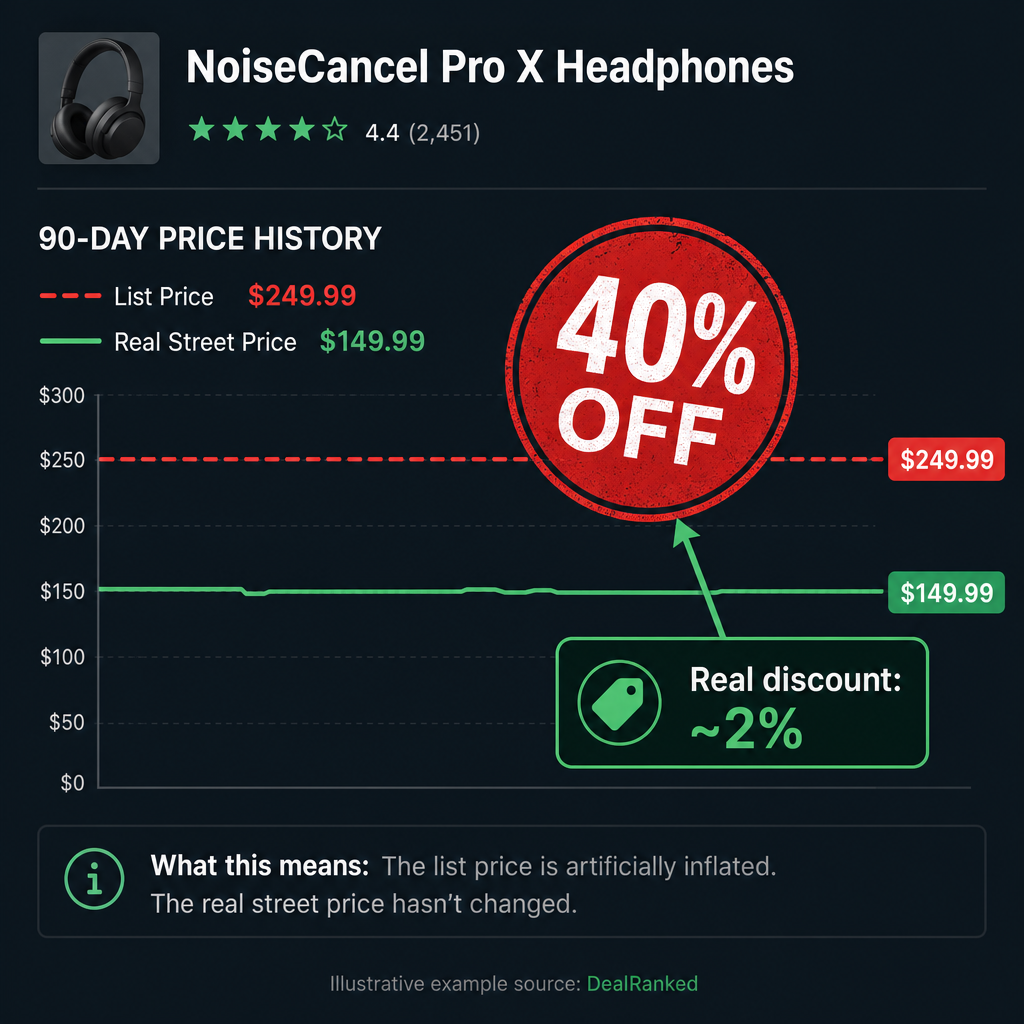
Amazon runs hundreds of thousands of "deals" every day. Most are forgettable, but some are genuinely excellent. The challenge is that Amazon puts the discount front and center, while the information that actually matters is buried deeper in the listing.
Over time, I've found that good deal hunting is less about finding bargains and more about avoiding bad purchases disguised as bargains. That's the exact filter DealRanked is built around.
TL;DR
- The discount badge is the least reliable number on the page. Check price history (Amazon's own 90 day chart or Keepa) before trusting any "% off." Rule #1
- Reviews come before discounts. A great price on a mediocre product is still a mediocre product. Rule #2
- Missing a deal costs you nothing. Buying the wrong thing because of a big red badge costs you real money, since most popular categories cycle back to similar pricing throughout the year. Rule #4
DealRanked Rule #1: The Discount Badge Is Usually the Least Important Number
A product is not a good deal just because Amazon says it is 40% off. A product is a good deal when the current price is meaningfully lower than what it normally sells for.
Before getting excited about a percentage discount, ask one question:
Would I still be happy with this price if the discount badge disappeared?
If the answer is no, the discount is doing more work than the product. The best deals still look attractive after you remove the advertising.
What a Real Amazon Deal Usually Needs
A strong deal usually checks all three boxes:
- Real price drop: The current price is meaningfully below its typical 90 day price history
- Real product quality: The product has earned strong reviews, ideally 4.3 stars or higher with substantial review volume
- Real seller trust: The item is sold or fulfilled by a seller you trust
Miss one of those and the discount often stops mattering.
A mediocre product at 50% off is still just a mediocre product.
DealRanked Rule #2: Reviews Before Discounts
Most shoppers follow the same pattern. They see a giant discount, get excited, then check the reviews later. Experienced shoppers reverse the order. They start with product quality, then look at price. Amazon wants your attention on the red percentage badge. That is rarely where the most important information lives.
A Better Order of Operations
Use Amazon filters in this order:
- Start with reviews: Sort by Average Customer Review first so you are not wasting time on products people regret buying
- Then apply discount filters: Once the weak products are out, start looking for meaningful discounts
- Check the seller before checkout: Third party listings deserve extra scrutiny because pricing, fulfillment quality, and seller standards can vary dramatically
- Confirm the exact version: Color, size, storage, pack count, and model year can change the deal completely
This flips the normal Amazon shopping pattern. Instead of asking, "What is the biggest discount?" you ask, "Which good products are actually discounted?"
That one shift prevents a lot of bad purchases.
DealRanked Rule #3: Price History Beats Today's Price
A 40% off badge tells you one thing. Price history tells you everything else.
A discount based on an inflated reference price is not a real discount. If the current price looks ordinary on a price chart, the deal is ordinary too.
How to Check Price History on Amazon
When you are on an Amazon product page, look near the current price. Amazon often shows a Price history link beside the sale price. Clicking this reveals the actual 90 day pricing trend.
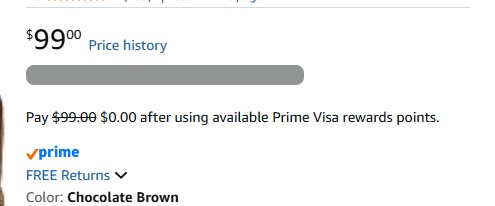
That small chart can answer the question the discount badge avoids:
Is today's price actually lower than usual, or does it just look lower because of the list price?
If Amazon shows that the product recently sold for a similar price, the deal is probably weaker than it looks. If the current price is near the low point of the recent range, you may have something worth considering.
Use Keepa for a Deeper Check
For expensive products, use Keepa before buying. Keepa shows a longer pricing timeline and can reveal patterns Amazon's quick view may not make obvious.
Use it especially for:
- Electronics
- Robot vacuums
- Headphones
- Monitors
- Small appliances
- Amazon devices
- Any product over $100
The goal is not to become a price tracking expert. The goal is to avoid being fooled by a fake reference price.
Where DealRanked Helps
Use DealRanked as a second filter before you buy. Each deal card shows a deal score and Truth Bullets, and you can click into the deal card to dive deeper.
It is very common to find pricing insights through the Truth Bullets and the Deep Dive section. Those sections are built to surface the context most Amazon listings do not make obvious.
Here is an example of a deal card you would see on DealRanked, complete with score, Truth Bullets, and a path into the Deep Dive:
Featured deal: Anker 25,000mAh Laptop Power Bank
The point is simple: a deal should beat its own history, not just its list price.
DealRanked Rule #4: Bad Purchases Cost More Than Missed Deals
One major mistake shoppers make is treating every sale like a once in a lifetime opportunity.
Most are not.
Popular categories often revisit similar pricing throughout the year, especially doorbells, headphones, iPads, coffee makers, and home office gear. If a deal slips past you, another opportunity often follows.
Missing a deal feels painful. Escaping a bad purchase is invisible.
Most shoppers worry about the wrong one.
When Waiting Makes Sense
Waiting is usually smarter when:
- The product is not urgent
- The current discount is decent but not special
- The item regularly appears in major sale events
- Price history shows the product has dropped lower before
- You are buying above $100 and the deal does not feel clearly strong
If you need the product today, buy the best verified price you can find. If you do not need it today, patience is often worth more than another coupon code.
DealRanked Rule #5: Do Not Let Amazon Build Your Cart
Prime Day, Prime Big Deal Days, Black Friday, and Cyber Monday are worth watching because they increase the odds that quality products reach unusually competitive pricing.
They do not guarantee the best price on every item.
That distinction matters.
Use Sale Events for the Right Purchases
Sale events are most useful for:
- Products you already planned to buy
- Items you have already researched
- Brands with stable pricing history
- Larger purchases where a real discount matters
- Wish list items you can afford to wait on
Do not show up to a major sale event and let Amazon tell you what to purchase.
Common Amazon Deal Traps
If a listing requires detective work to understand the savings, there is a good chance the savings are not as impressive as they appear.
Watch closely for:
- Fake reference prices: The slashed price looks impressive, but the product may not have sold at that higher price in any meaningful way
- Variant switching: Amazon shows a strong discount on the listing, but the color, size, storage option, or model you actually want is full price
- Review manipulation: Thousands of ratings do not automatically mean thousands of happy customers
- Bundle math: Household products often hide the true value inside pack counts and unit prices
- Coupon games: A coupon box can make a listing feel special even when the final price is just normal
How DealRanked Fits In
Most deal sites stop at showing you a discount.
DealRanked tries to answer the harder question:
Is this discount actually worth your attention?
Every deal is graded using a scoring engine built on 7 metrics:
- Discount quality
- Competitive pricing
- Feature strength
- Validation signals
- Ownership value
- Buyer protection
- Urgency
Each deal receives a strict score between 5.5 and 9.6.
That range matters. A perfect 10 would feel fake. A score below 5 would not belong on a curated deal site in the first place.
A vacuum and a pair of headphones are totally different products, but the same question applies to both:
Is this a better buy than the alternatives right now?
That is what the score is built to help answer.
Read the Truth Bullets First
The most useful part of a DealRanked page is often the Truth Bullets.
They are designed to answer the question most deal pages avoid:
What's the catch?
Every good deal has context. Sometimes the catch is battery life. Sometimes it is subscription cost. Sometimes it is an older model. Sometimes it is simply that the discount is good, but not rare.
That context is what turns a deal from tempting into understandable.
A Simple Weekly Routine for Better Amazon Deals
You do not need to check Amazon all day.
Use a simple routine:
- Scan top scoring deals in categories you already care about
- Check Amazon's Price history link when it appears near the product price
- Use Keepa for higher ticket items or products with suspicious list prices
- Read reviews before getting excited about discounts
- Verify the seller and exact version before checkout
- Save major purchases for Prime Day, Prime Big Deal Days, Black Friday, and Cyber Monday when possible
This routine takes a few minutes. It eliminates a surprising amount of noise.
The Bottom Line
The best Amazon deal hunters are skeptical by default.
They spend less time chasing discounts and more time avoiding bad purchases.
That mindset saves more money than any coupon code ever will.
When you are ready browse today's ranked deals and put this routine into practice.